
Folsom, CA · Garage Door Service
Why So Many Folsom Garage Doors Were Never Built to Hold Heat
Most Folsom garage doors date to the 1962-2004 building boom, before insulation standards caught up. Here's what that means for your door today.
- Repairs & new doors
- Springs & openers
- Serving 8 nearby communities
The Problem
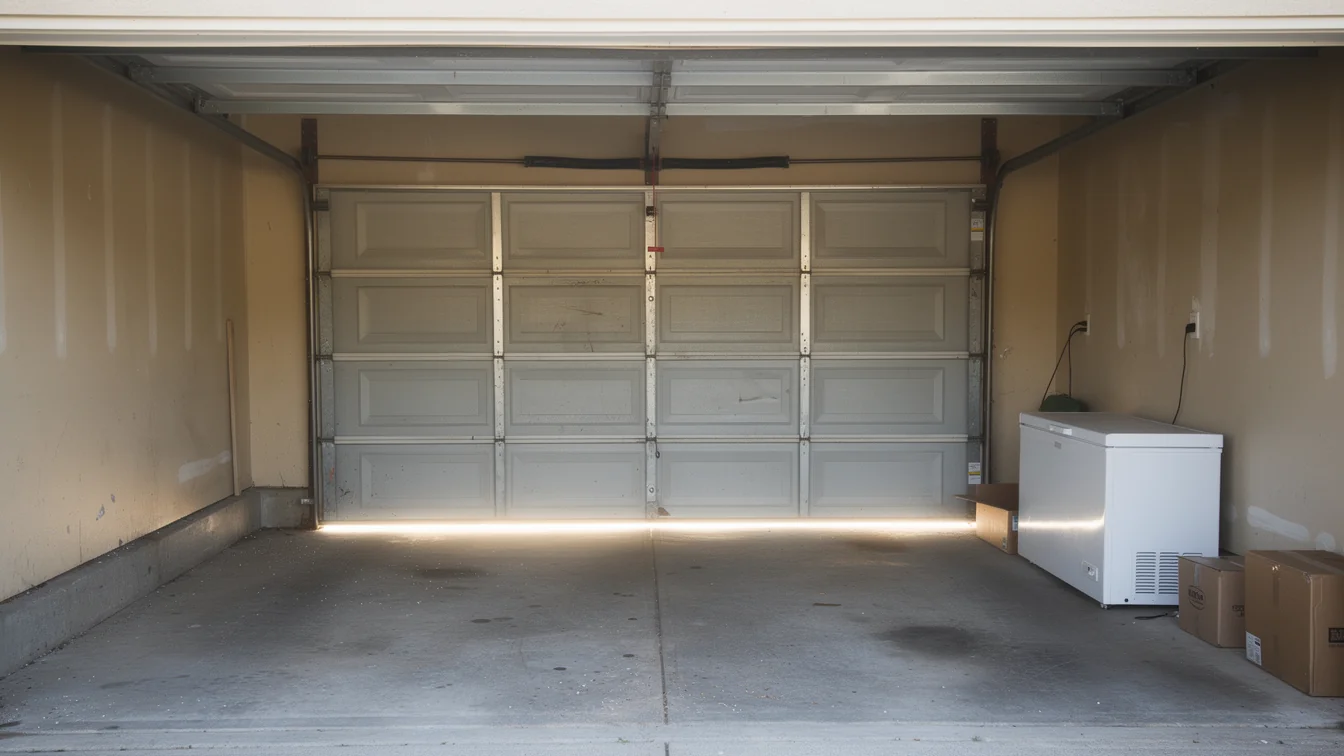
Folsom's housing stock mostly went up between 1962 and 2004, with the median build year landing around 1981. That matters more than most homeowners realize. A door installed in 1981 was built to the standards of 1981 - thin steel skin, no foam core, a single layer of material between your garage and the outside air. Insulated garage doors didn't become a common builder spec until years after most of this city's tracts were already framed and roofed. So if your house sits in one of the 28 named areas across this service area that filled in through the 80s and 90s, there's a good chance the door hanging on it is a hollow-panel design that was never meant to do more than keep rain and raccoons out. It did that job fine for its era. It was never an insulation product, and it still isn't one, no matter how many weatherstrip kits get pressed around the edges. The panel itself is the gap. You can seal every seam on a single-skin door and still feel the garage running ten degrees off the rest of the house, because the steel is doing exactly what 1981 asked of it and nothing more.
What Most People Get Wrong
The common move is to caulk the door, add a bottom seal, maybe tape foam strips along the frame, and call it solved. That helps with drafts but does nothing for the panel itself. A single-skin steel door from the 1970s-through-90s construction wave that dominates this area has no thermal break and no core - it's one sheet of metal, full stop. No amount of weatherstripping changes the R-value of sheet steel. The other mistake is assuming the opener or the springs have anything to do with heat transfer; they don't, and spending money there to fix a comfort complaint is wasted money. If the garage backs onto a bedroom or a laundry room, as it does in a lot of the ranch and split-level layouts built across this stretch of houses from that era, the fix that actually changes anything is swapping the panel for an insulated one, not patching the one you've got. We'll tell you straight when a door's hardware is fine and the only honest option is replacing the slab itself - that's not an upsell, it's just what a non-insulated panel from that build period requires if insulation is the actual goal.
The Seasonal Bit
This area sits in a moderate heat climate band, not an extreme one, so the pressure on an old door isn't dramatic swings - it's steady, season-long heat soak on an uninsulated panel. A single-skin steel door absorbs sun through the summer stretch and radiates that heat straight into the garage, which then pushes into any attached living space. With median household income here near $97,972 and roughly 86,345 owner-occupied houses across the area, a lot of these households can afford the fix but just haven't connected the dots between the old garage door and the warm room next to it. It's not a dramatic failure, it's a slow one - the kind you adjust to rather than notice, until someone finally asks why the garage side of the house always runs warmer than the rest.
What the Weather Here Does to It
Moderate heat doesn't crack a door open the way freeze-thaw cycles do elsewhere, but it does steady work on old steel. Years of thermal expansion and contraction on a single-skin panel from the 1962-2004 build window loosens seams, warps thin steel sections, and can throw a door slightly out of square at the track - not a safety failure, usually, but enough that it binds or drags on hot afternoons. We see this most on original doors in the older end of that build range, closer to the 1981 median, that have never been swapped. One honest limit: if the door is original and the track, rollers, and opener are all original too, replacing just the skin rarely makes sense - by that age the whole assembly is usually due, and patching one part while the rest ages out under it isn't a good use of your money.
Frequently asked questions
Is my garage door actually insulated or not?
If your house was built in the 1970s through the early 90s, which covers most of this area, check for a single flat steel sheet with no visible layer behind it. That's uninsulated. Insulated doors have a visible foam or polystyrene core, usually with a second steel or vinyl back layer. We can confirm it on site in a couple minutes.
Will adding weatherstripping fix the heat problem?
It helps with drafts around the edges but does nothing for the panel itself. A single-skin steel door from this era has no insulating core, so heat moves straight through the metal regardless of how well the perimeter is sealed. If comfort is the goal, the panel is the part that needs to change.
How old does a door have to be before it's worth replacing instead of fixing?
It depends on the hardware, not just the panel. If the track, rollers, and opener are also original to a house from the 1962-2004 build range, patching just the door skin usually isn't worth it. We'll tell you when the whole assembly is past the point where a partial fix makes sense.
Related garage door services in Folsom
More garage door guides
Book garage door service in Folsom
Call now or request a quote - tell us what the door is doing and where you are.