Folsom, CA · Garage Door Service
What We Actually Check During a Folsom Service Call
A look at what a Folsom service call actually checks, built around the 1962-2004 housing stock and the heat this area sees most of the year.
- Repairs & new doors
- Springs & openers
- Serving 8 nearby communities
The Problem
Most calls we get in Folsom start the same way: the door stopped, or it's making a noise someone's been ignoring for a month. What the homeowner usually doesn't know is that the fix depends a lot on when the house was built. Folsom's housing stock runs 1962 to 2004, with the median landing around 1981, so a tech walking up to your garage could be looking at hardware from four different decades depending on the street. A service call here isn't one checklist - it's figuring out which era of door and opener you've actually got before touching anything. Homes from the early part of that range often still have their original torsion springs and openers that have been replaced once, maybe twice. Newer builds closer to 2004 usually have steel doors with factory-installed openers that are more standardized. Neither is better or worse, but treating them the same is how people end up paying for parts they didn't need, or missing a fix that would've solved the real issue.
What Most People Get Wrong
The biggest mistake is assuming a noisy door means a dying opener. On a lot of the 1980s and 90s builds that make up most of Folsom's housing, the opener is fine - it's the track alignment or the rollers that have worn down over twenty-plus years of daily use. We check rollers and track bolts before we ever talk about replacing a motor, because on houses this age, hardware fatigue shows up well before the opener itself quits. The other thing people get wrong is waiting. A spring that's starting to sag isn't a cosmetic issue; it changes how much weight the opener is lifting every single day, and that wears the opener's gears faster than normal use would. We won't pretend every call ends in a full repair, though - sometimes a door this old just needs a $20 part and a half hour, and we'll tell you that instead of running up the invoice.
The Seasonal Bit
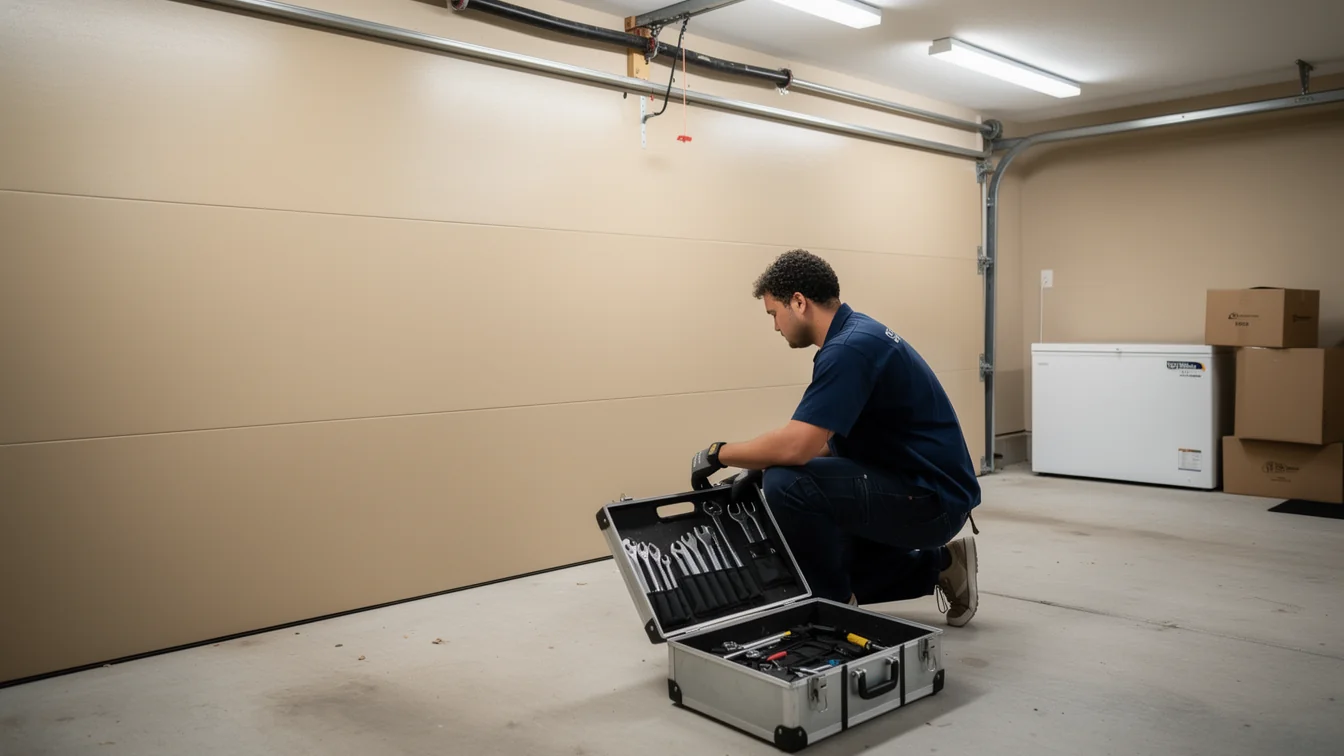
A full service check runs through the same list regardless of the month: springs, cables, rollers, track alignment, opener force settings, and the weather seal at the bottom of the door. What changes with the season is which of those items is most likely to be the actual problem. Doors that sat mostly still over a slow stretch tend to show spring and cable wear first, because the hardware stiffens up with disuse. Doors used daily, especially on homes with the garage facing west, show roller and track wear sooner. We're not running a 20-point inspection to pad the bill - it's the same handful of parts that fail on homes built in this window, checked in the order most likely to find the real issue fast.
What the Weather Here Does to It
Folsom sits in a moderate heat climate band, which isn't the brutal extreme some inland areas deal with, but it's still enough heat exposure over a year to matter for a door built in the 1980s or 90s. Steel panels expand and contract with heat cycles, and on doors that age, the panel seams and weatherstripping have usually already taken thirty-plus years of that cycling. That's a big part of why we check the bottom seal and panel seams on every call here - not because of one bad storm, but because of decades of ordinary heat doing slow, cumulative work on original hardware. It's also why nylon rollers tend to outlast steel ones on older Folsom doors; steel rollers that have been riding in heat-expanded tracks for years develop a wobble that's easy to miss until the door is already binding.
Frequently asked questions
How do you know what parts my door needs before you get there?
We don't, not for certain - that's why the visit starts with a look at the door and opener before any work begins. Given Folsom's housing built mostly between 1962 and 2004, we've got a good idea of what's common for a given era, but every door has its own repair history, so we check rather than assume.
Is a noisy door always a sign I need a new opener?
Not usually. On the 1980s and 90s stock that makes up most of Folsom, noise is more often worn rollers or a misaligned track than a failing opener. We check the cheaper, more common failure points first before talking about replacing the opener itself.
Does Folsom's climate affect how often I need service?
Folsom sits in a moderate heat band, not an extreme one, but heat cycling over decades still stresses panel seams, weatherstripping, and rollers on older doors. It's one of the reasons those items are on every check we do here, regardless of the season.
Will you tell me if a repair isn't worth it?
Yes. Some doors from the earlier end of Folsom's 1962-2004 housing range have hardware that's hard to match or source anymore. When a repair would cost close to what replacement runs, we say so instead of patching something that'll fail again soon.
Related garage door services in Folsom
More garage door guides
Book garage door service in Folsom
Call now or request a quote - tell us what the door is doing and where you are.