Folsom, CA · Garage Door Service
Weather Seals and Drafts in Folsom Garage Doors
Folsom homes built 1962-2004 often have worn weather seals letting in drafts. See why this housing stock and our moderate heat band make seals wear differently here.
- Repairs & new doors
- Springs & openers
- Serving 8 nearby communities
The Problem
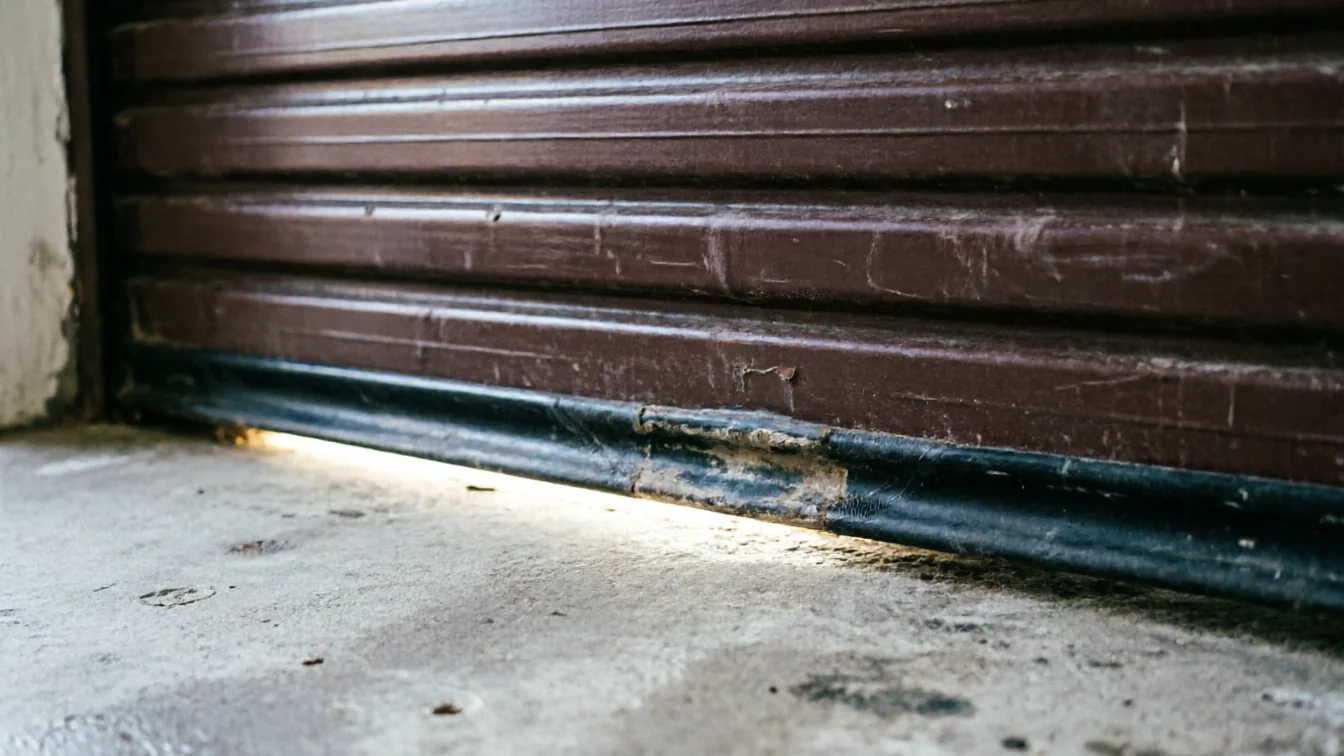
A lot of the garage doors we look at in Folsom are original to houses built somewhere between 1962 and 2004, with the bulk of that stock going up in the 1980s and 90s. That matters for weather seals because the bottom astragal and side seals on a door that old have usually been baked and flexed for decades without anyone touching them. You feel it as a draft along the slab, a line of dust that collects just inside the door, or daylight showing at the corners when the door's down. The seal material itself has gone stiff and cracked, and it no longer sits flush against the concrete or the jamb the way it did when the house was new. Owners in Orangevale, Fair Oaks, and Gold River tell us the same thing: the door looks fine, closes fine, and still lets air straight through. It's not the door failing. It's rubber that's outlived its job.
What Most People Get Wrong
The common mistake is treating a drafty door like an insulation problem and buying a kit without checking what's actually failing. On a lot of these 1980s-and-90s-era doors, the track alignment has drifted slightly over the years, which means the seal never had a flat surface to press against in the first place, even brand new. Swap the rubber and you'll still get a gap if the roller path is off by even a quarter inch. We also see people caulk around the frame instead of replacing the bottom seal, which stops wind but traps moisture against old wood trim common in this housing era. Before anyone recommends a fix, we check the track, the slab, and the seal channel separately. A seal is cheap. Chasing the wrong cause isn't.
The Seasonal Bit
Folsom sits in a moderate heat climate band, not an extreme one, so we don't see the kind of seal failure that comes from repeated freeze-thaw cracking or six months of sustained heavy cold. What we see instead is slow material fatigue from sun exposure on south- and west-facing doors, which is common across the stock built from 1962 through 2004. The vinyl or rubber dries out gradually rather than splitting in one hard season. That's actually good news for timing repairs: there's no single month where every seal in the area fails at once, so you can get ahead of it on your own schedule instead of racing a cold front. We'd rather catch a seal going brittle in spring than have someone call in July wondering why the garage is ten degrees hotter than it should be.
What the Weather Here Does to It
Because the heat band here is moderate rather than extreme, the bigger issue for weather seals and drafts isn't cold air forcing its way in, it's UV and heat cycling breaking the seal down from the surface in. That shows up first on doors facing direct afternoon sun, which is a layout you see a lot in the neighborhoods built through the 1980s and 90s across this area, including homes out toward Gold River and Granite Bay. The fix is usually a straightforward seal and astragal swap, not a full door replacement, as long as the track and panel underneath are sound. We won't sell a full door over a bad seal. If the panel's straight and the track's true, a new bottom seal and side seal kit solves the draft for a fraction of what replacement costs, and it's worth doing before the seal cracks enough to let water in too.
Frequently asked questions
Why does my garage door let in a draft even though it closes all the way?
On houses built in the 1962-2004 range, which covers most of Folsom's stock, the rubber bottom seal and side seals have usually hardened with age. The door can close fully and still not press flat against the slab or jamb, leaving a gap you feel as moving air even with the door shut tight.
Does Folsom's climate wear out seals faster than other parts of the country?
We're in a moderate heat band here, not an extreme one, so seals don't crack from deep freeze-thaw cycles. What wears them down is steady sun and heat exposure on south- and west-facing doors, which dries out the rubber gradually rather than splitting it in one season.
Will a new seal fix a drafty door or do I need a new door?
Usually just the seal, if the track and panel are straight. We check alignment first because a worn seal on a door built decades ago sometimes sits against a track that's drifted slightly, and replacing rubber alone won't fix that. We don't recommend a full door swap unless the panel or track is actually bad.
How often should I expect to replace garage door weather seals in this area?
We don't have an exact interval to quote you, but homes from the 1980s-90s stock common here typically need a look at the seal once it starts showing visible cracking or daylight gaps, which tends to be the clearest sign it's time rather than a fixed number of years.
Related garage door services in Folsom
More garage door guides
Book garage door service in Folsom
Call now or request a quote - tell us what the door is doing and where you are.