Folsom, CA · Garage Door Service
What Happens to Your Garage Door Opener When the Power Outages in Folsom
In Folsom's 1962-2004 housing stock, garage door openers fail during power outages in a specific way. Here's what to check before calling for a repair.
- Repairs & new doors
- Springs & openers
- Serving 8 nearby communities
The Problem
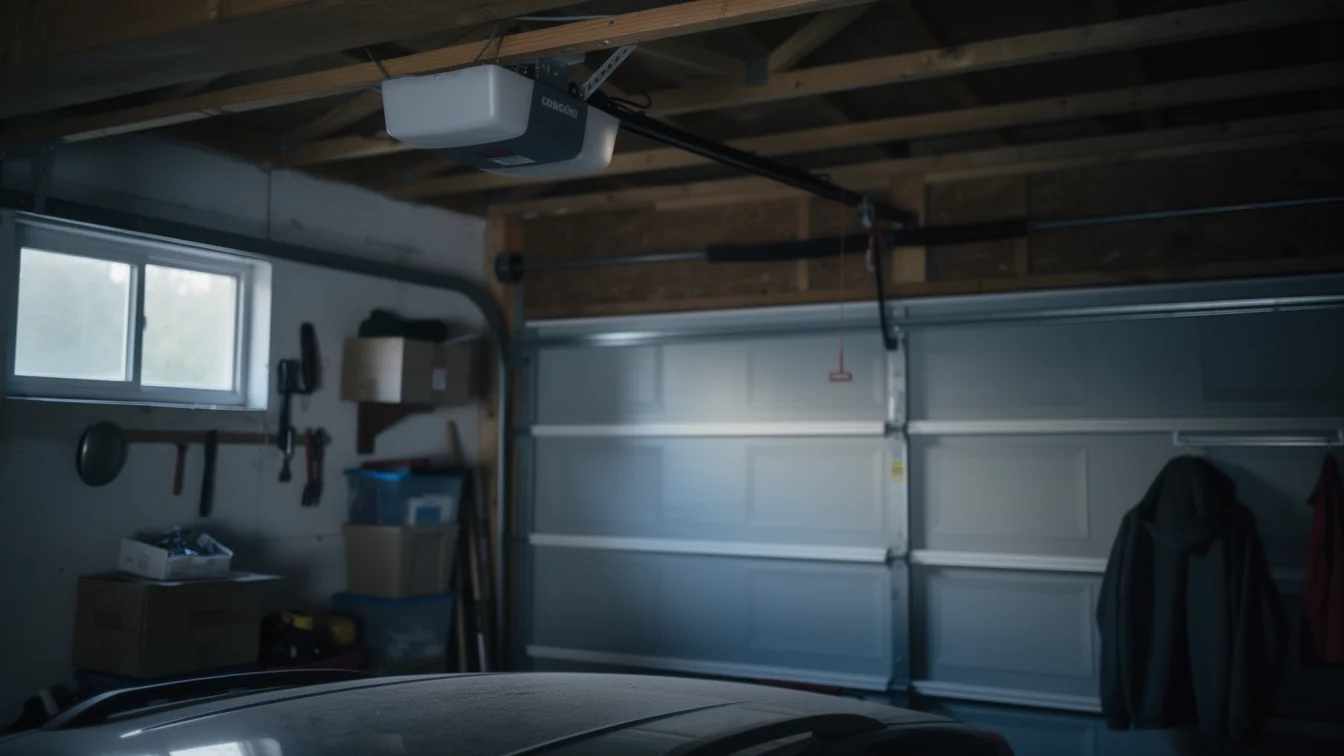
Folsom's housing stock mostly went up between 1962 and 2004, with the median build year sitting around 1981. That means a lot of garage door openers in this service area are themselves decades old, installed when the house was built or close to it, long before battery backup was standard equipment. When the power outages, the opener motor stops cold mid-cycle - the door can end up stuck halfway, or fully down with the trolley locked to the carriage.
Every opener has a manual release, a red cord hanging from the trolley rail, that disconnects the door from the motor so you can lift it by hand. On a heavier wood or steel panel door from that 1980s build era, the springs are doing most of the lifting work, not your arms, so a properly tensioned door should still move with moderate effort once released. If it doesn't, the spring itself may be the problem, not the power.
We can't predict when the power will cut out, and we don't install whole-house generators. What we can do is make sure the manual release and the spring tension are both working the way they should, so a power outage is an inconvenience and not a stuck car.
What Most People Get Wrong
The biggest mistake we see: someone pulls the emergency release cord while the door is still up, without a hand under the bottom panel, and the door drops fast. On the heavier doors typical of homes built in the 1962-2004 window here, that drop can bend a track or crack a panel. Always support the door, or lower it most of the way with the opener first if you still have any power at all.
The second mistake is assuming a dead opener means a dead door. The two systems are mechanically connected but not dependent on each other. Springs and cables move the door; the opener just takes over that work so you don't have to crank it by hand every day.
The third mistake, and one we can't always fix the way people want, is assuming a battery backup kit will bolt onto any opener. A lot of the chain-drive units installed in this area's 1980s and 90s housing stock use rail and logic board designs that don't accept a modern backup module. Sometimes the honest answer is that retrofitting backup power onto a 30-plus-year-old opener costs more than replacing the unit outright, and we'll tell you that instead of selling you a part that won't hold.
The Seasonal Bit
Folsom sits in a moderate heat climate band, and that matters more for openers than people expect. Across the roughly 169,115 households in this service area, summer is when electrical demand peaks - air conditioners running long hours, more appliances drawing current at once - and that's also when short outages are most likely to hit a neighborhood.
An opener caught mid-cycle during one of those outages is the call we get most in the hot months. It isn't a coincidence tied to the door itself; it's that the grid is working hardest exactly when your opener is also working hardest, cycling more often because people are in and out of the garage chasing shade or loading up before the heat sets in.
Openers built into homes from that 1962-2004 stretch, especially the older end near 1981, have logic boards and capacitors that have already been through a few decades of seasonal heat cycling. A unit that's handled thirty summers doesn't fail because of one hot week, but the cumulative wear shows up as exactly this kind of mid-cycle stall when the power blinks.
What the Weather Here Does to It
This area's climate band is moderate heat, not the deep-freeze conditions that crack panels or seize torsion springs in colder regions. So the weather story here isn't about ice or frost heave under the slab. It's about heat load on the electrical side of the opener: wiring insulation, circuit boards, and capacitors degrade faster with repeated heat exposure over the years, and that shows up as the kind of outage-related stall covered above.
The honest limitation: we can replace an opener's logic board or swap the whole unit, but we can't do anything about how the local grid handles peak summer demand. If outages during hot stretches are a recurring problem at your house, a battery backup opener is the fix on our end, but the timing of the outages themselves is out of our hands.
For homes in this 1962-2004 stock, especially ones that still have the original or first-replacement opener, heat-driven wear is usually further along than the owner expects, simply because the unit has been cycling through moderate-heat summers for most or all of those decades.
Frequently asked questions
My garage door opener stopped working during a power outage. Is the opener broken?
Not necessarily. Pull the manual release cord hanging from the trolley rail - that disconnects the door from the motor. If the door lifts by hand with moderate effort, the opener is fine and just needs power back. If it won't budge or feels heavy, the spring may be the actual problem.
Should I get a battery backup opener in Folsom?
Worth considering if outages during the hot months have caught your door mid-cycle before. Our area sees peak electrical demand in summer, which is when short outages are most likely. Just know that a lot of older chain-drive openers in this area's 1980s and 90s housing stock can't accept a backup module and need a full swap instead.
Why does my opener act up more in summer?
The local climate runs in a moderate heat band, and summer is when household electrical demand across the service area peaks. Older opener boards, especially in units original to homes from the 1962-2004 build era, have been through decades of that seasonal heat cycling and are more prone to stalling mid-cycle.
Can I just pull the release cord to get my car out during an outage?
Yes, that's what it's for, but support the door with a hand under the bottom panel first. On the heavier panel doors common to older homes here, pulling the cord with the door up and nothing holding it can let it drop fast enough to bend a track.
Related garage door services in Folsom
More garage door guides
Book garage door service in Folsom
Call now or request a quote - tell us what the door is doing and where you are.