Folsom, CA · Garage Door Service
Why a Door Goes Off Track in Folsom
Folsom's housing stock dates mostly from 1962 to 2004, and the heat here works on track brackets and rollers in ways that push doors off their rails. Here's why.
- Repairs & new doors
- Springs & openers
- Serving 8 nearby communities
The Problem
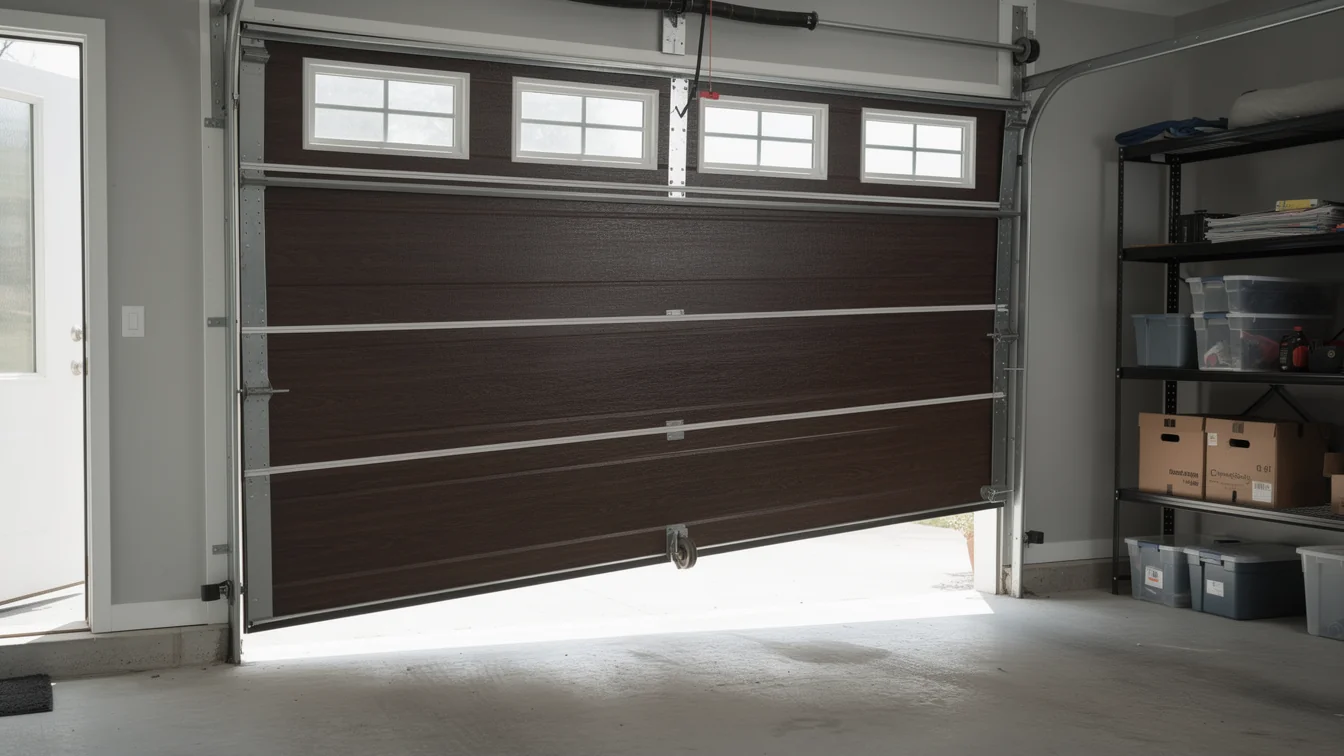
A door off track almost never happens on its own. Something pushes it there - a bent track, a roller that's worn down to the pin, a bracket with a loose bolt, or a cable that's jumped the drum. In Folsom, the age of the housing stock matters more than people think. With most homes here built between 1962 and 2004, and a median build year around 1981, a lot of garages still have the original track and hardware, or a first-generation replacement from the 90s. Galvanized track lasts, but the brackets holding it to the framing loosen over decades of door cycles, and once a bracket shifts even a quarter inch, the rollers start riding the edge of the rail instead of the center. That's when a door jumps track, usually on the next big slam-close or a door cycle on a hot afternoon when the metal's already expanded. It's rarely a single event - it's hardware that's been drifting out of alignment for years before it finally lets go.
What Most People Get Wrong
The common mistake is assuming an off-track door is a track problem. Most of the time it isn't. We find the track itself is straight and the real issue is a bracket, a roller, or cable tension that let the door wander until it caught the edge of the rail wrong. Homeowners also try to force the door back onto the track themselves, which can bend the rail further or snap a cable under tension - and once a cable's involved, that's not a DIY fix, full stop. Given how much of this area's housing dates to the 1962-2004 window, a lot of these doors are also carrying original torsion hardware that was never upgraded when the opener was replaced. Swapping the opener doesn't fix worn rollers or a stretched spring, and a mismatch between an old door and a new opener is one of the more common reasons we see a track jump within a year of an opener install.
The Seasonal Bit
Folsom sits in a moderate heat climate band, which means the garage isn't swinging through brutal freeze-thaw cycles the way some regions do, but it does see real daily heat swings, especially on an unshaded west-facing garage in summer. Metal track and brackets expand and contract with that daily heat load, and fasteners that were torqued down tight in cooler months work looser over repeated hot afternoons. That's a slow process, not a dramatic one - you won't notice it until the door starts dragging on one side or a roller finally pops the rail. It also means track alignment checks matter more here than in a climate with flatter temperatures, because the hardware is moving, just not in ways anyone sees day to day.
What the Weather Here Does to It
Heat doesn't just loosen brackets - it dries out lubricant on rollers and hinges faster than people expect, and a dry roller binds instead of rolling smooth through the track. A binding roller puts sideways load on the rail it was never built for, and that's often the last straw for a bracket that was already a little loose. We won't pretend every off-track call in Folsom is weather-driven - plenty are just old hardware finally failing, no drama involved - but on the hottest stretches of the year we do see a bump in track and roller calls that tracks with the heat, not with any one storm or event. If your door's been dragging or making a new noise before it comes off the rail, that's the window to get it looked at, not after.
Frequently asked questions
Why did my garage door suddenly come off the track?
It's rarely sudden - a bracket or roller has usually been drifting for a while. Given how much of Folsom's housing dates to 1962-2004, a lot of doors are running original or early-replacement hardware that's finally reached the end of its working life, and a hot day or hard close is often just the trigger, not the cause.
Can I push the door back onto the track myself?
We don't recommend it. If a cable has jumped the drum along with the track, the door is under spring tension and forcing it back can snap the cable or bend the rail further. It's a call-a-pro repair, not a weekend fix.
Does Folsom's climate affect garage door hardware?
Folsom sits in a moderate heat band, so there's no deep freeze-thaw cycle, but daily heat swings on a sun-facing garage door still expand and contract metal track and dry out roller lubricant faster than you'd expect, which adds up over the years.
Is it worth replacing the whole door or just fixing the track?
Depends on the hardware's age. If the track is bent and the door is from the original 1962-2004 building wave with worn rollers and springs to match, a repair might just set up the next failure. We'll tell you honestly which side of that line your door is on.
Related garage door services in Folsom
More garage door guides
Book garage door service in Folsom
Call now or request a quote - tell us what the door is doing and where you are.